We worked as a three-person tarp squad when the rains started to patter on the roof in the middle of the night, scrambling to bring in spices and other perishables from outside. Climbed back into my bag worrying about my souvenirs so got up again to check they were okay (Kel had fixed the gaping hole in the tarp. Damp breakfast before ploughing further down the sandy road.
Into the Savuti Marsh section of Chobe National Park for a slow day of sand driving, mud hole detouring and fabulous game sightings. Huge herds of Angolan impalas, including the remains of one; we only recognised its head because it was attached to a carcass and our rumbling arrival sent huge vultures into the air; they sat in a nearby tree until we passed. Herds of waterbuck, kori bustards, red and yellow-billed hornbills, and pretty lilac breasted rollers sitting in a tree only feet from the road. We saw a few lone elephants, and small groups, all moving away from us; a single spotted hyena, a massive muscular animal that watched us for minutes before skulking away; a black-backed jackal, with a rich tan coat and black and white spotted black stripes running down to its tail, came so close to the truck we could see its sharp features, like a long-legged fox; we spotted another jackal in the distance; the giraffes we saw were nearly all much paler than those we’d seen elsewhere, many appearing almost washed out, though these could have been youngsters. In the afternoon we drove through vast grasslands, hundreds of skeletal trees, standing and uprooted and dark grey bark against the green fields and blue sky, and other stripped of bark. Foraging elephants may have done this devastation but the only animals we saw were huge herds of almost black wildebeest, a few impalas and some warthogs. This haunting landscape suggested that the park has an overpopulation problem.
A flock of about 12 ostriches, black and white males and brown females. crossed the road in front of us, the biggest we’ve seen so far. And then much later we veered towards a big herd of zebra. Those of us in the back assumed this was to see the zebra but eagle-eyed Gary had spotted a lion that the rest of us couldn't see until he pointed it out to us, not in the trees ahead but right in front of us, the top of a head and ears twitching in the grasses about 40 ft from the truck. I think she’d been quietly watching the zebra with a view to having one for lunch – but she ambled away into the trees.
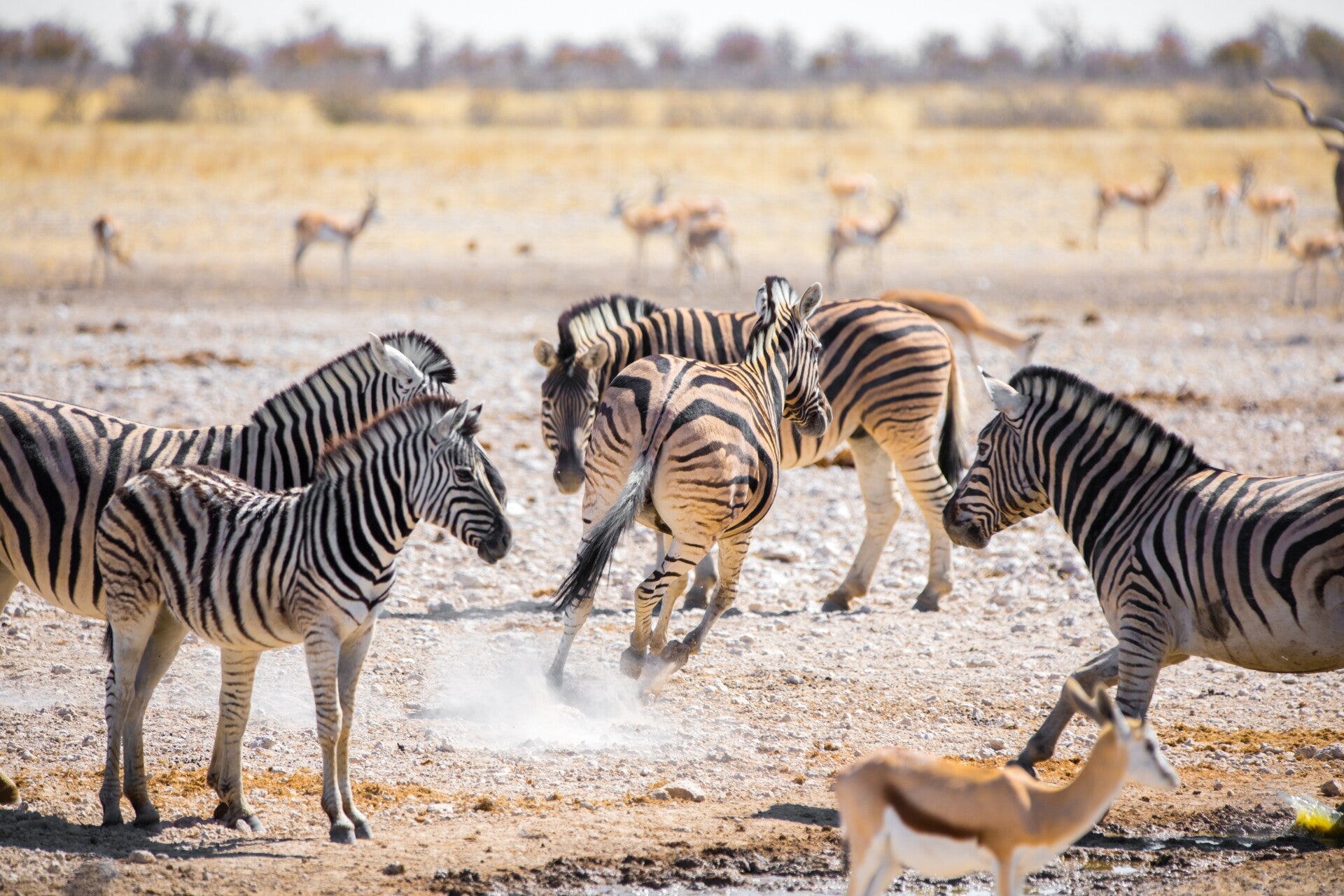
In the late afternoon we came upon a mass of zebra, perhaps 1000 animals, one barely separated from another, a blur of black and white backed by more of the same. Mothers protected their tiny calves at our approach, quickly but soundlessly moving away.
Despite the game, many of us dozed off during the afternoon, until a yell of "Rhino!" shook us from our lassitude. A mother rhinocerous and calf were running through the bush ahead of us, then stopped at the track edge. The female turned towards us threatening to charge, but the rumble of our engine changed her mind. She ran across the road into the trees instead. It was all over in seconds, everybody stunned and surprised - those lucky enough to be ready fired cameras like guns, others just hung out the side to watch. We spent the next half hour with eyes peeled.
We made camp early, having completed the circuit through Chobe's best game area. Cold but clean showers, loos that flush and have paper!
Fractious dinner, with tempers starting to fray after so long on the road, tolerances lowered and maybe people just not trying as hard to control sharp words and personal differences when the end is so near. I'm looking forward to farewelling everyone but not sure I really want to lose this type of living – so totally unnatural and difference from anything else I’ve experienced.
Lots of people writing on the truck. I was the last to bed, as the roar of lions reached us - either the sound is carrying a long way or they are very close. The whole camping area is a mass of animal tracks – paws and hoofprints of different sizes - so we're undoubtedly trespassing on a popular passage area.
Add comment
Comments