Ate a late breakfast and then sat by the pool writing to Mum & Dad before boarding Stanley. We drove into town to shop and then hit the road to Mayer’s Maasai Ranch, a journey that took us well out of the city and down into the Rift Valley.
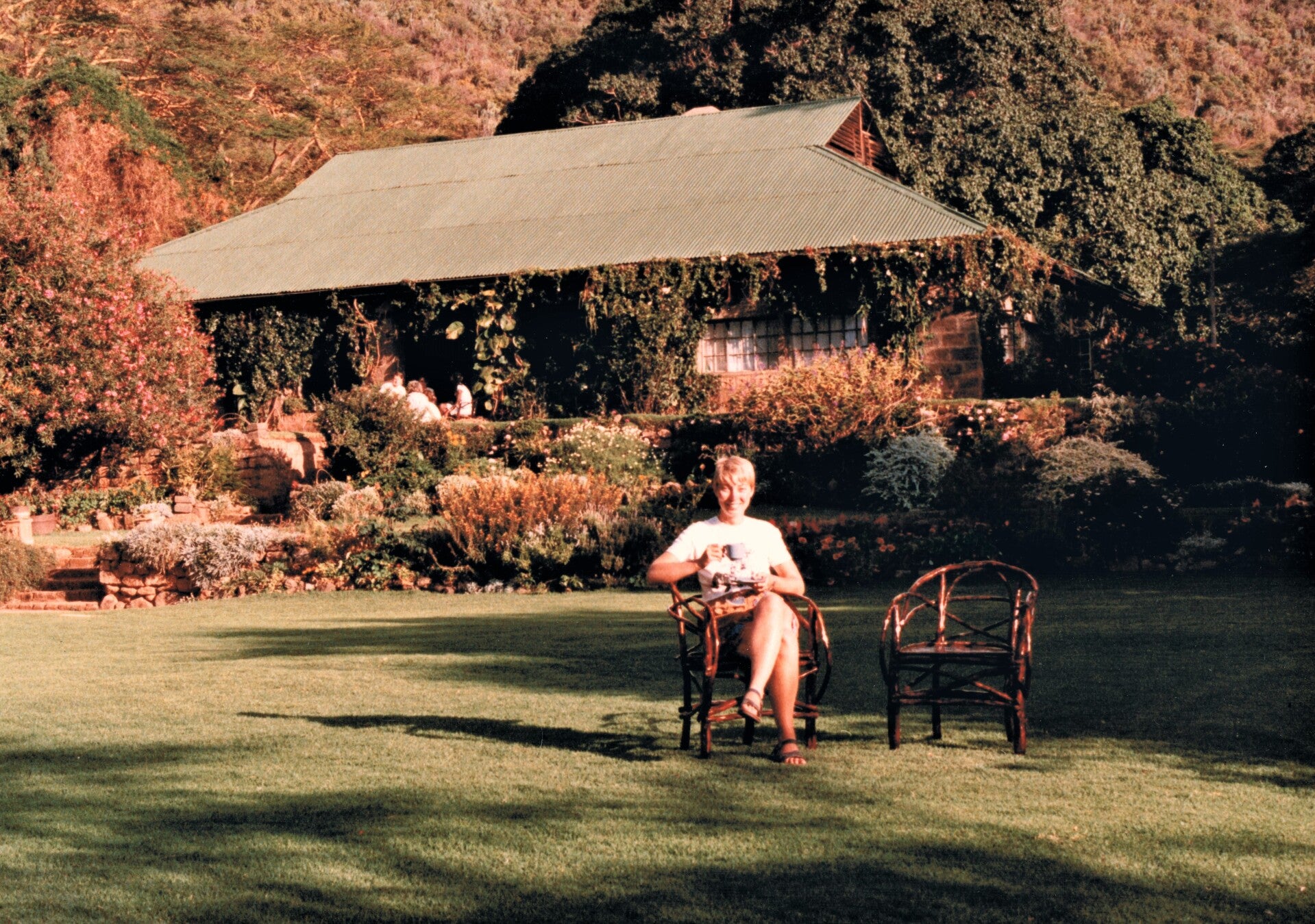
Nothing was due to start until 3.30pm and we arrived two hours early, but the ranch gates were open so we drove into a house-and-garden setting out of an English country real estate magazine but with very African mountains and thorn trees. An elegant stone house nestled at the foot of sheer treed hills and Jacarandas, acacias and towering timbers, poincianas, English border flowers, flowering shrubs mixed with banana palms decorated lawns of coarse springy grass. Natural springs had been steered into a series of pools and cascades edged with mossy rocks and ferns and full of fish. Bridges spanned the stream: wooden planks and another one of soil built upon the root system of an overhanging tree.
Rain forced us back into the truck, where we snoozed, wrote and played Mad. Thunder and lightning suggested we were up for a long wet Masai afternoon, and the weather deteriorated before it eased, but a hint of blue appeared as we headed down the track to the village.
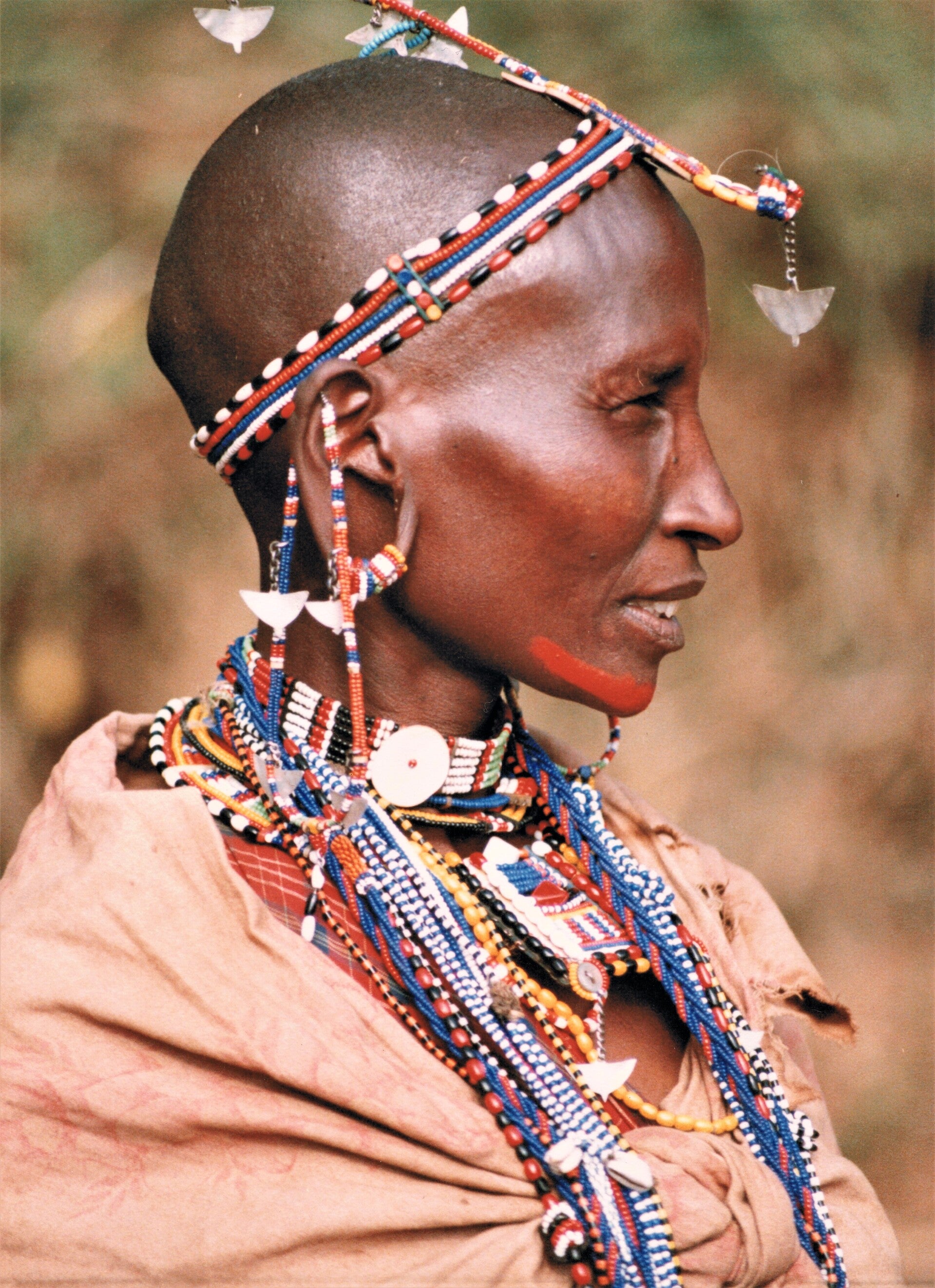
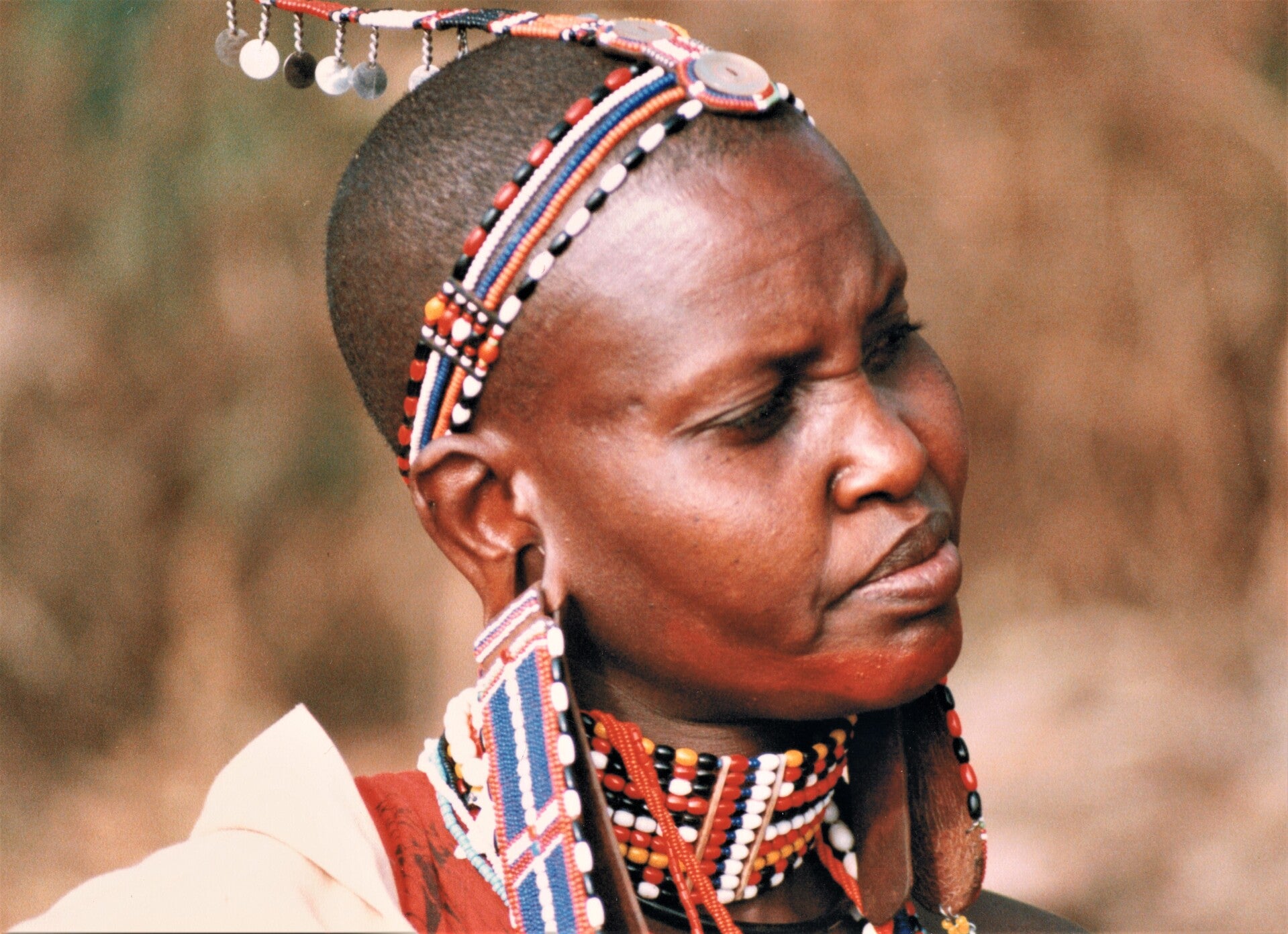
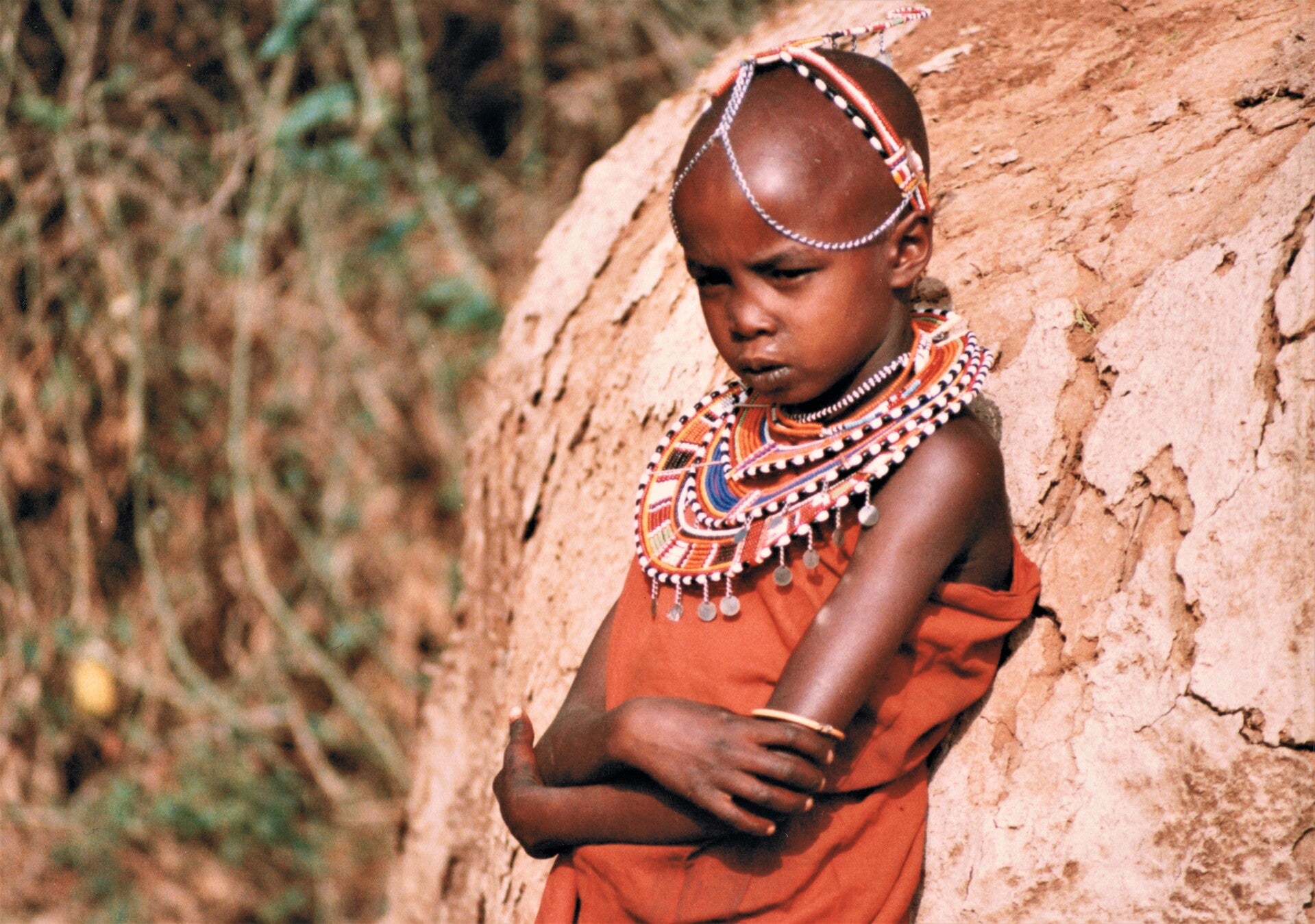
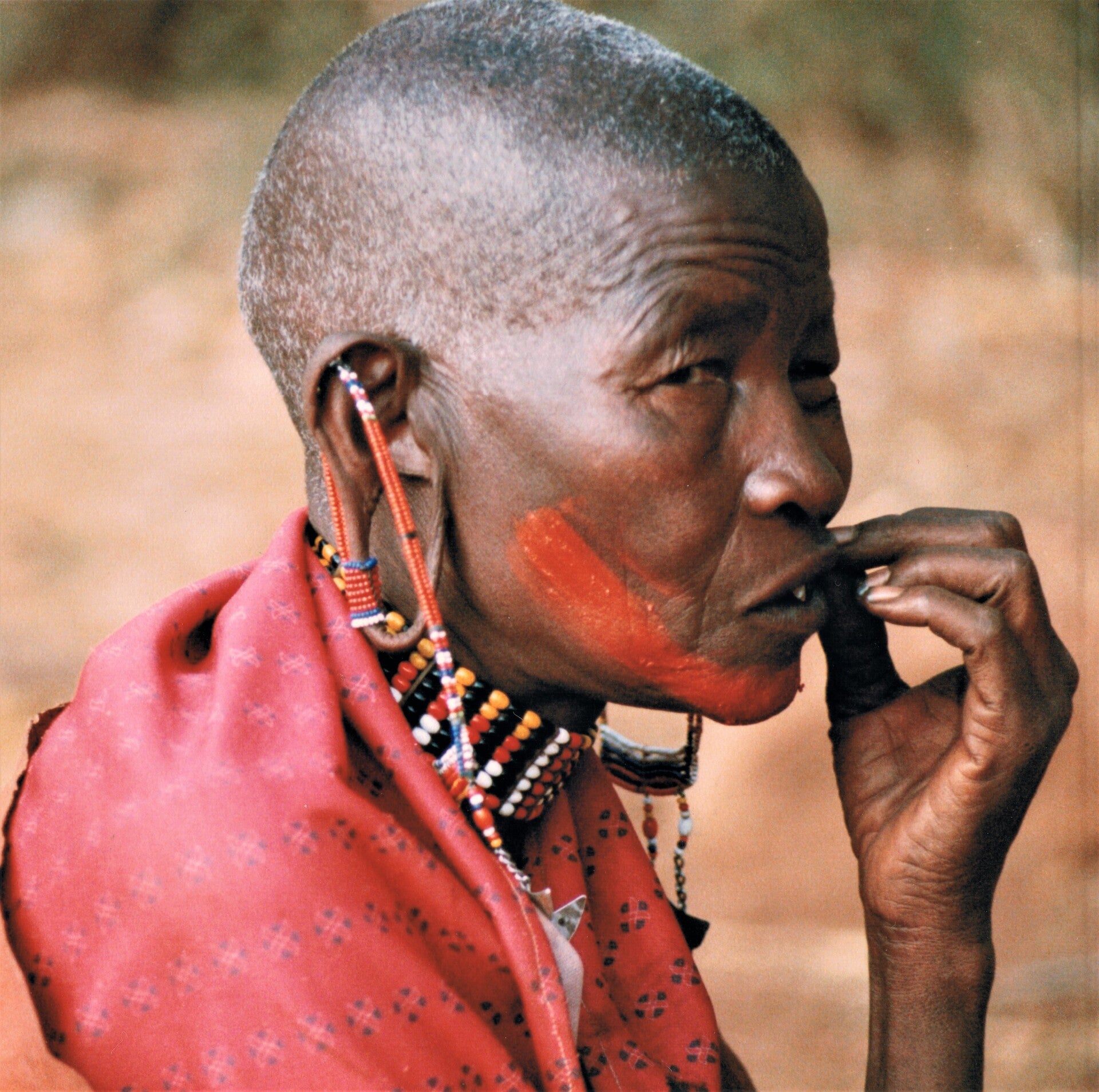
We wandered through the "village" on the property, taking numerous photographs, although the "villagers" weren't all as friendly as one wrinkled old lady who posed for us and then gave us a huge smile. Unsurprisingly, many of the women and girls looked bored and sullen at yet another invasion of tourists - and what a batch they were, most of them loud, wealthy middle-aged American men and women who made me feel very underdressed but at the same time proud of being an overlander rather than one of these epitomes of wealth and fashion.
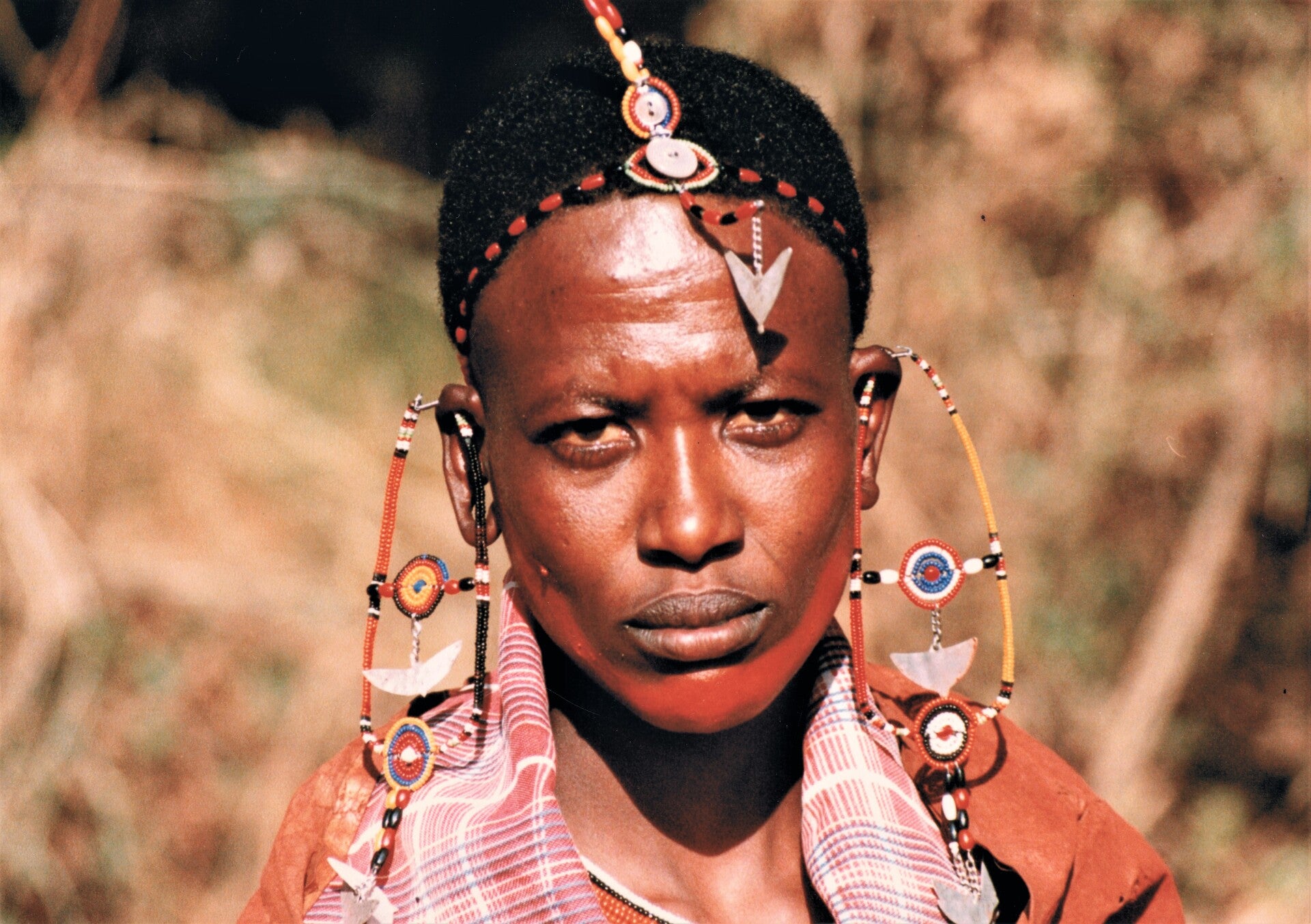
Full dress Maasai ranging from adult warriors to tiny tots carrying huge spears, including a father-son pair, ushered us down a track to a small oval, at the back of which Maasai and Samburu women were selling jewellery from blankets spread on the ground.
The show then started. Maasai moran (young warriors) began to try to outdo each other at jumping, performing impressive vertical leaps by flexing their ankles rather than bending their knees. Some of the moran had fine features and were very handsome, bordering on beautiful; while many of the pubescent girls were very sensual. There followed a series of songs, dances, more jumping and then the chance to buy souvenirs and take more photos. While very touristy, the show allowed us to see some activities that we would usually be banned from seeing. I suppose, if these traditions are at risk of dying out without the interest of paying travellers maybe then we are helping preserve them.
After the show Vicki chatted with one moran who spoke excellent English. He told her he was planning to train as a moran for two more months and then hoped to become a businessman – to make lots of money. He wants to travel – especially to Europa.
The frightfully British young hostesses answered questions about the show and the Maasai and Sumburu tribes, and described some of the differences. Maasai men wear long, spun sheep's wool wigs reddened with pulverized soil and animal fat; they use very little or no face paint, paint their legs and have bare feet; they also wear red only; some of the older men wore high, horseshoe shaped feathered headdresses. Maasai women wear flat/plate neck jewellery and chains across their necks and nose. Samburu men wear red, white and yellow and daub their own hair with pulverized soil and animal fat, have painted faces and clean legs, and wear shoes, shells and spiky beads in their ears; Samburu women wear stacked beads and plates around their necks, disc shells in ear lobes and spear-head metal pieces on their foreheads.
The hostesses also told us that the tribes encourage cross breeding with other villages because inbreeding began to create fertility problems in the women, who build the huts, cook, clean, and bear an average of 7 children. Young boys tend the village's cattle, the animals around which they exist – the common greeting is “I hope your cattle are well.”
The Maasai in the Nairobi region keep their hair rather shorter than is traditional because the government is trying to wipe out warrior training in support of sole Kenyan armed forces. Long tresses giveaway that the Masai is a moran and can lead to their arrest, so they wear wigs for performances. Further from the capital, Maasai retain their traditional long hair.
The sun came out during the performance and after the show we all went crazy taking photographs and haggling, trading and buying spears and jewellery. The wealthy Americans then left, leaving us to enjoy a frightfully civilized afternoon tea of cake and biscuits on the lawns in front of the house - such are the hardships of overland travel.
The Mayer's Maasai Ranch brochure describes a “tightly woven culture reluctant to change” but I'm not so sure it is so tightly woven. On the way out we passed one of the proud warriors on the road – cleaned of paint and clad in denim. I wonder how much of their Maasai self they leave behind with the robes and makeup. Yes, we saw traditionally dressed Maasai near Masai Mara, who appeared to live traditionally but they sell their "art" along the roadside too. Is that just an extension of traditional trading? How much have they lost with the modernization of Kenya and the introduction of white man’s ideas and culture. And who am I to say that they should retain it if they don't want to? I wonder if such questions even cross the minds of the safari crowds from Nairobi on their moneyed travels.
Add comment
Comments