(Warning: this post includes description of an animal being killed and butchered for consumption.)
The day started off in a manner to which none of us are accustomed or want to be.
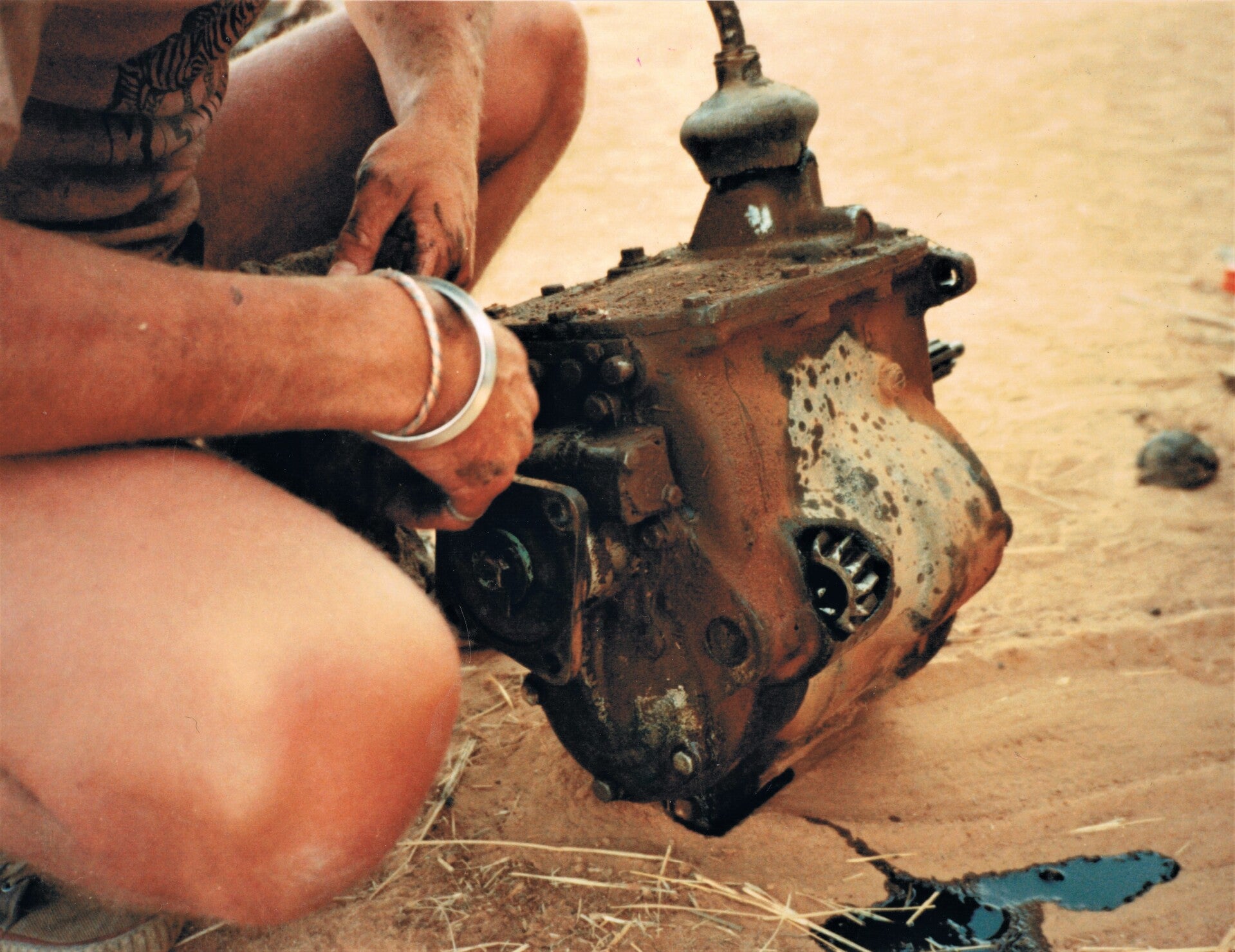
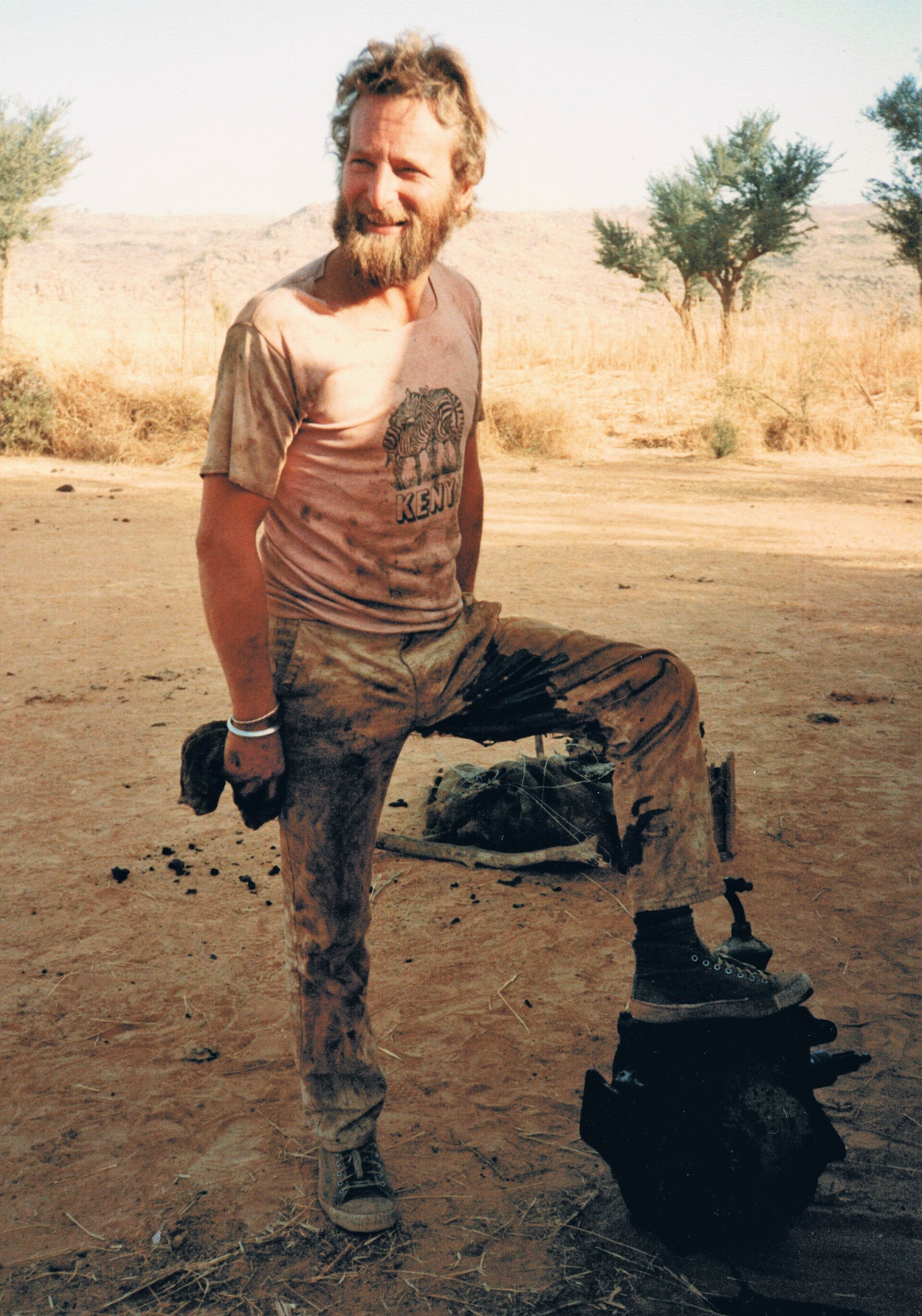
Just out of camp Kel drove under a thorn tree that reached into the truck and scratched my arms and set me screaming. Then, trying to ford one of the deep gullies in our path, Kel doubted we could get through the loose sand so revved hard and reversed out again, a manoeuvre that produced horribly unusual mechanical noises. Having looked under the truck, Kel and Ben's horrified expressions indicated we had a serious problem. Having pushed the truck off the road we viewed the damage and even the least mechanically experienced of us realised that a 3-inch hole in the side of the transmission casing with a section of gear protruding was not good.
Major surgery was required so some of us set up a fire with tea and coffee while Jeff retrieved the broken metal plug from the gaping hole a few metres back along the track. (Kel and Ben subsequently repaired the damage, putting the housing shard back in the hole and sealing with metal glue. The only issue was that we had no reverse gear, which would make sand matting fun!)
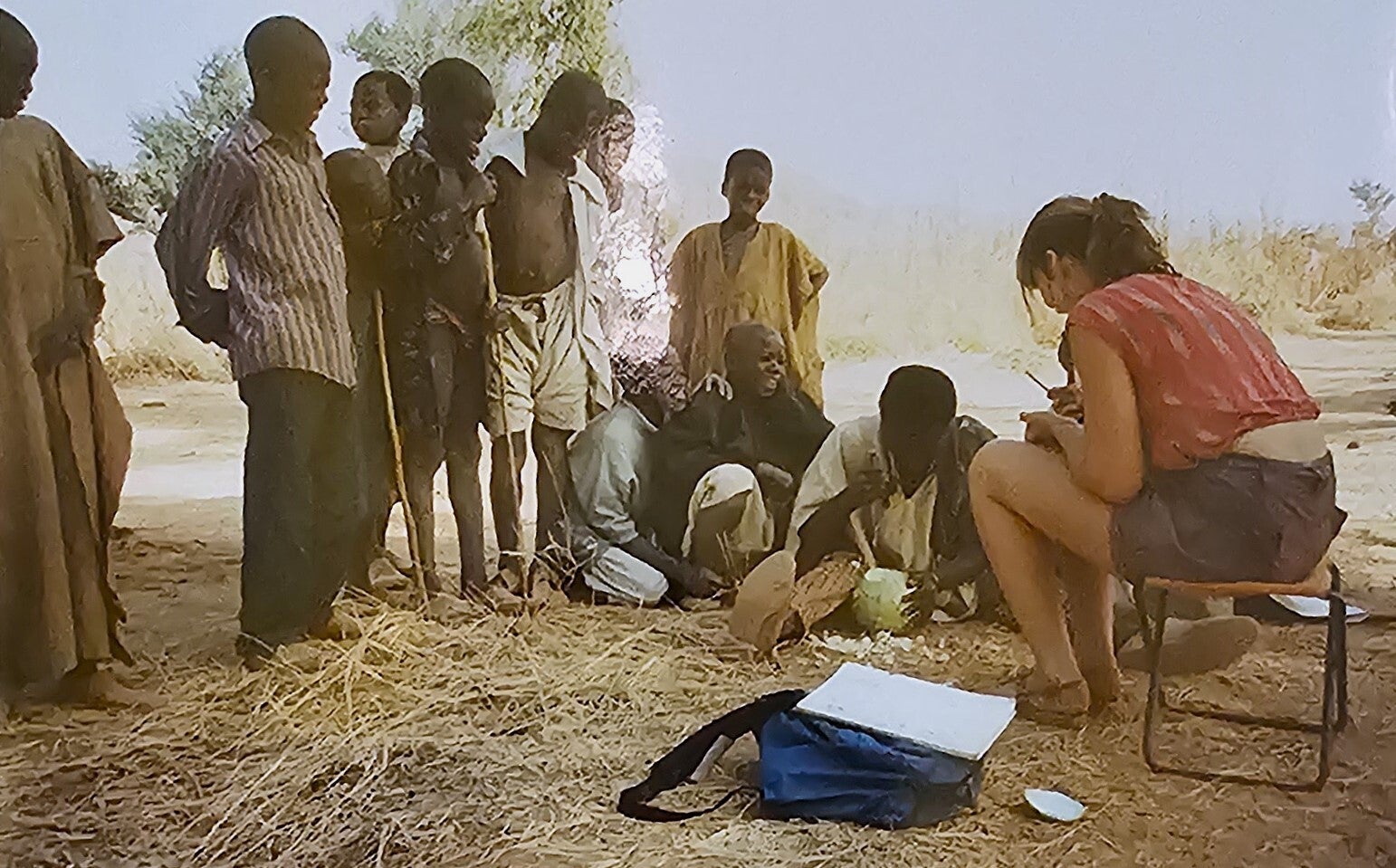
It was soon obvious that we were here for the day, so we settled in for an unexpected travel-free break. Vicki drew postcards, Julie started to cut out and decorate a gourd and others read or went for walks. Children and men from the Dogon village tucked behind a millet field and line of trees were soon part of our rough camp.
The grasses around us rustling with goats so Kel suggested we ask the village chief if we could buy a goat and have it butchered for dinner and a multi-language delegation set off to investigate, Marcus our French representative.
Turning right at a baobab tree, our ever-increasing crowd of people crossed millet fields and wandered down lanes between mud buildings to the chief’s house. Here, more locals gathered to watch the negotiations and then followed us as we set off almost back to the truck to view a herd of goats. Long discussions followed, about size, colour, sex, particular animal and finally price, the chief’s son wanting 10,000 Central African francs for a brown male goat with a white head. Another herdsman said he had two smaller females and would bring them for us to see and disappeared into the trees. Having regrouped back at the truck, the goat team following us and swelling the crowd of onlookers already there, a small white female goat was brought for our inspection; we decided she was too skinny so would live on today and asked for the brown one to be brought to the truck.
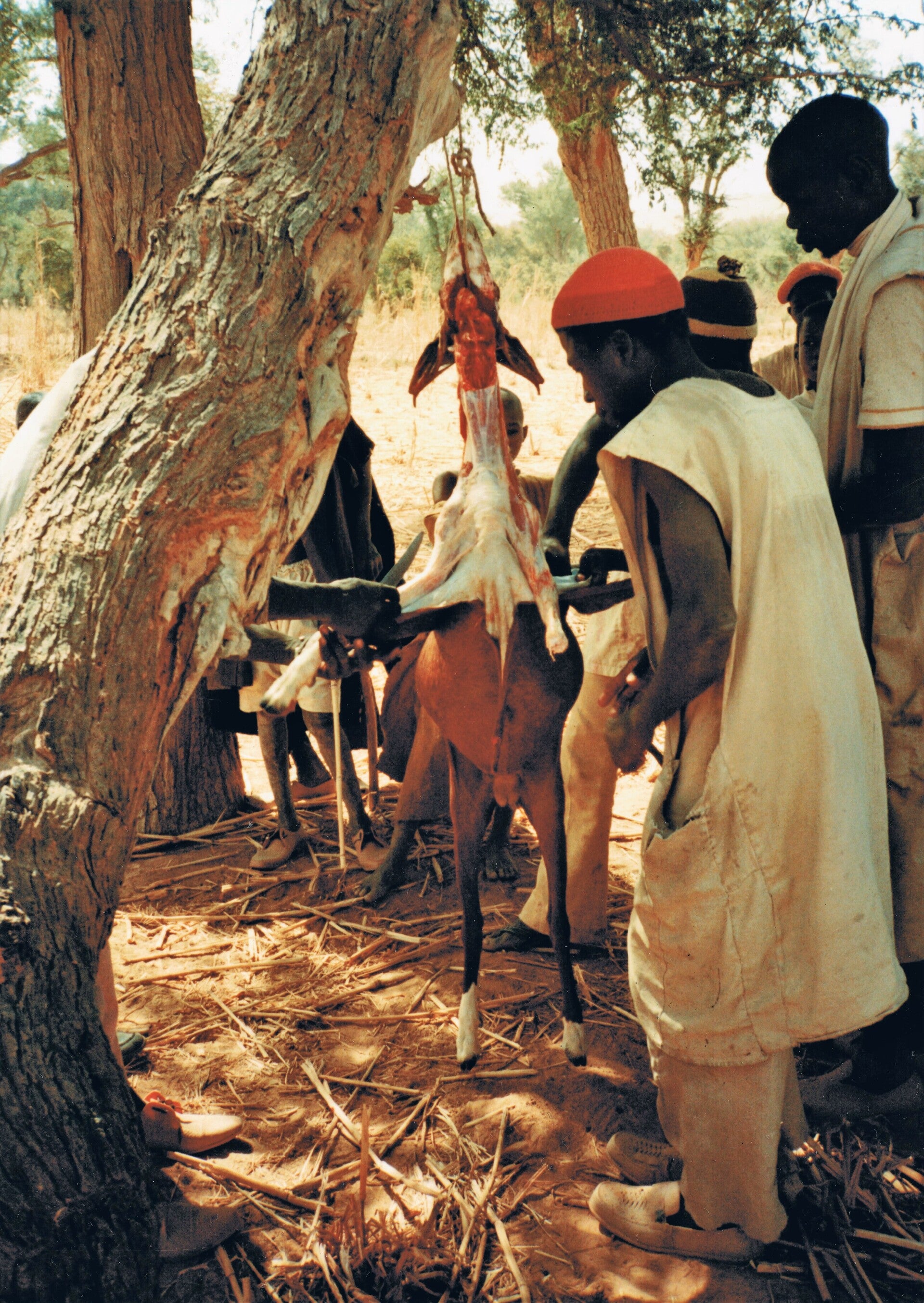
Local butchers brought the goat and took it about 10 metres from our camp to slaughter. A few fellow passengers voiced their revulsion but half a dozen of us watched the men cut the goat's throat, bleed it and skin it, their sharp knives and proficiency finishing the job very quickly. The men were shocked, and delighted, when we refused the goat's head, no doubt a delicacy for them and an unexpected bonus from the deal. We put the meat over the fire to cook slowly for the day.
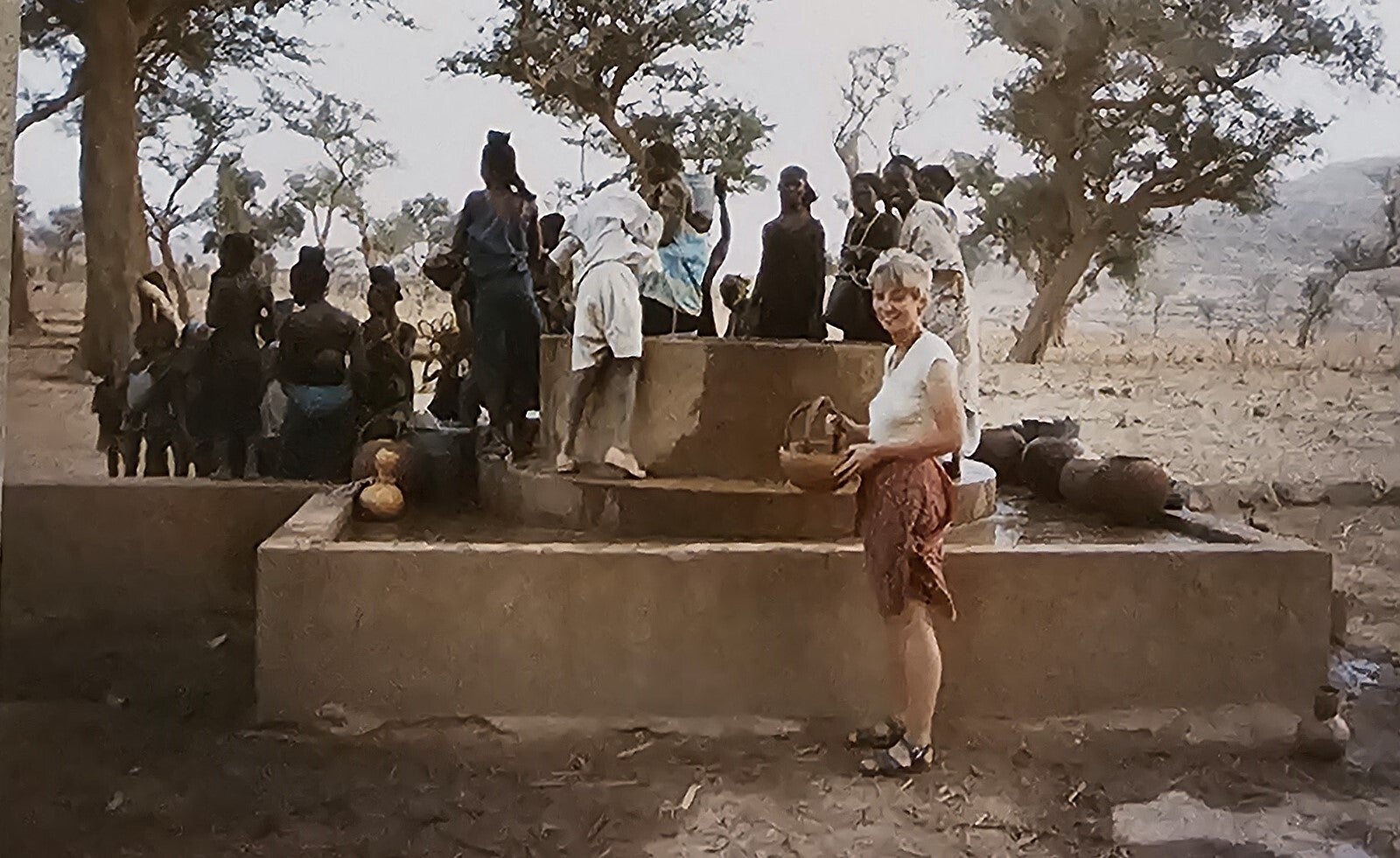
Nikki and I then headed to the village and joined a throng of women hauling water up the sheer vertical walls of a modern concrete well. I washed myself while Nikki laundered clothes, bent over in a sea of wet soil and goat dung, rinsing clothes in gallons of water tipped from a stitched half gourd with a handle by a friendly young man - the women were using udder shaped rubber buckets made of stitched inner tubes, some leaking from the corners but holding deceiving amounts of water.
Our once-more mobile truck appeared from among the trees and we spent ages washing and hauling water out of the well with rubber buckets and gourds and filling interminable jerry cans to fill the truck tank. The women were fascinated by our different personal washing activities, including Ben and Bob using the shower behind the truck. They giggled at Kelvin walking back to his washing site wearing only gym boots, socks and red undies. I traded two t-shirts for the well gourd we'd been using all afternoon (and I still have this souvenir, hanging beside my fireplace).
Bob was discomfited by the pendulous breasts of a young mother, seeing her with a western view of beauty. I thought her maternal breasts enhanced her beauty. There is as much mix here as anywhere of attractive and plain women, but I think that often their dark skin - their exoticness (to me, anyway) - hides their plainness.
Everyone finished, we loaded up and returned to camp, three villagers riding with us.
The goat was done when we got back, Gary having taken good care of our barbecue. Potatoes were our only vegetable, our two intrepid shoppers Hawk and Adri, not having returned from Douentza, so we made mash. But the suddenly appeared, very nearly exhausted, weighed down with onions, tomatoes, bread and 20 mangoes. We welcomed them back to the fold with fried goat liver for entree before making the final preparations for our gargantuan Exodus break-down goat dinner.
We got a huge fry pan of meat off the goat carcass, far more than we had thought and enough for everyone to eat well. The meat was very tender and tasty and the mangoes scrumptious, the fibres of both wedging between my teeth, requiring 15 minutes of dental flossing. What a delight to have meat again!
The British formation drinking team of Jeff and Kel, lubricated on Drambuie, cavorted around in the dust under the cook light and I laughed until I was sore.
Add comment
Comments